Single-compound peptide research remains the foundation of the field. But increasingly,
Australian researchers
are designing protocols that combine multiple peptides — targeting different phases of the same biological cascade simultaneously. Here’s the science behind peptide stacking and why it’s gaining momentum.
What Is Peptide Stacking?
Peptide stacking refers to the use of two or more peptides in a research protocol, chosen for their complementary or synergistic mechanisms of action. The rationale is straightforward: complex biological processes like tissue repair, inflammation resolution, and metabolic regulation involve multiple pathways. A single peptide, however well-studied, can only address a subset of those pathways at once.
By combining compounds that act through distinct but related mechanisms, researchers can study the effects of broader-spectrum intervention — and in many cases, observe additive or synergistic outcomes that wouldn’t be possible with either compound alone.
The Most Common Stacking Rationale in Recovery Research
The most established stacking approach in Australian peptide research combines BPC-157 and TB-500. The logic is mechanistically sound:
BPC-157 drives localised repair through growth hormone receptor upregulation and nitric oxide modulation.
TB-500 promotes actin polymerisation and cell migration with systemic reach beyond the injection site.
Together they address the localised and systemic dimensions of repair simultaneously — covering more of the healing cascade than either compound achieves independently.
Adding GHK-Cu and KPV: The Next Layer
More advanced stacking protocols add GHK-Cu for downstream collagen remodelling and gene-level tissue regeneration, and KPV for targeted anti-inflammatory activity upstream of the repair process.
This is the rationale behind Peps Aussie’ two proprietary research stacks:
GLOW 70mg — GHK-Cu, BPC-157, and TB-500. A broad-spectrum repair and regeneration stack targeting collagen synthesis, multi-tissue healing, and systemic recovery.
KLOW — KPV, GHK-Cu, BPC-157, and TB-500. Adds targeted cytokine inhibition and NF-κB suppression for researchers studying inflammatory pathways alongside structural repair.
Metabolic Stacking
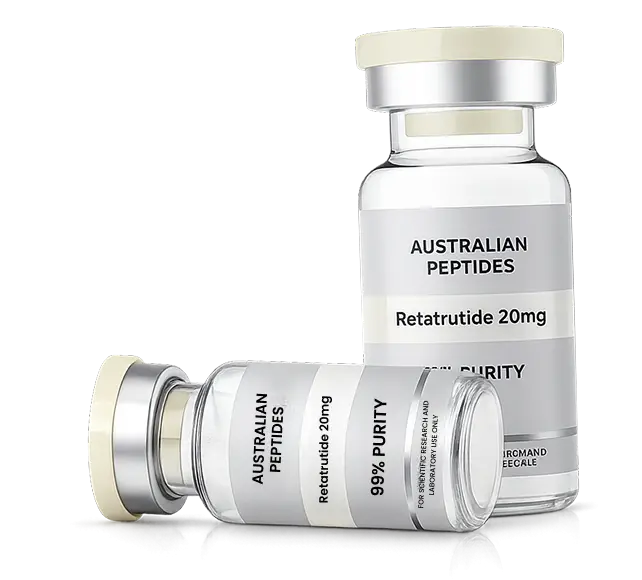
In the metabolic research space, stacking interest is growing around combinations of MOTS-c with GLP-1 class compounds like Retatrutide. MOTS-c activates AMPK through a mitochondrial pathway, while Retatrutide drives energy expenditure through GLP-1, GIP, and glucagon receptor co-activation. These are distinct and potentially complementary approaches to metabolic regulation that researchers are beginning to investigate in combination protocols.
Why Peps Aussie
Peps Aussie
supplies GLOW, KLOW, and all individual stack components for research purposes, alongside Retatrutide, MOTS-c, and a full catalogue of research-grade compounds. All products are independently tested and dispatched domestically with full documentation.