
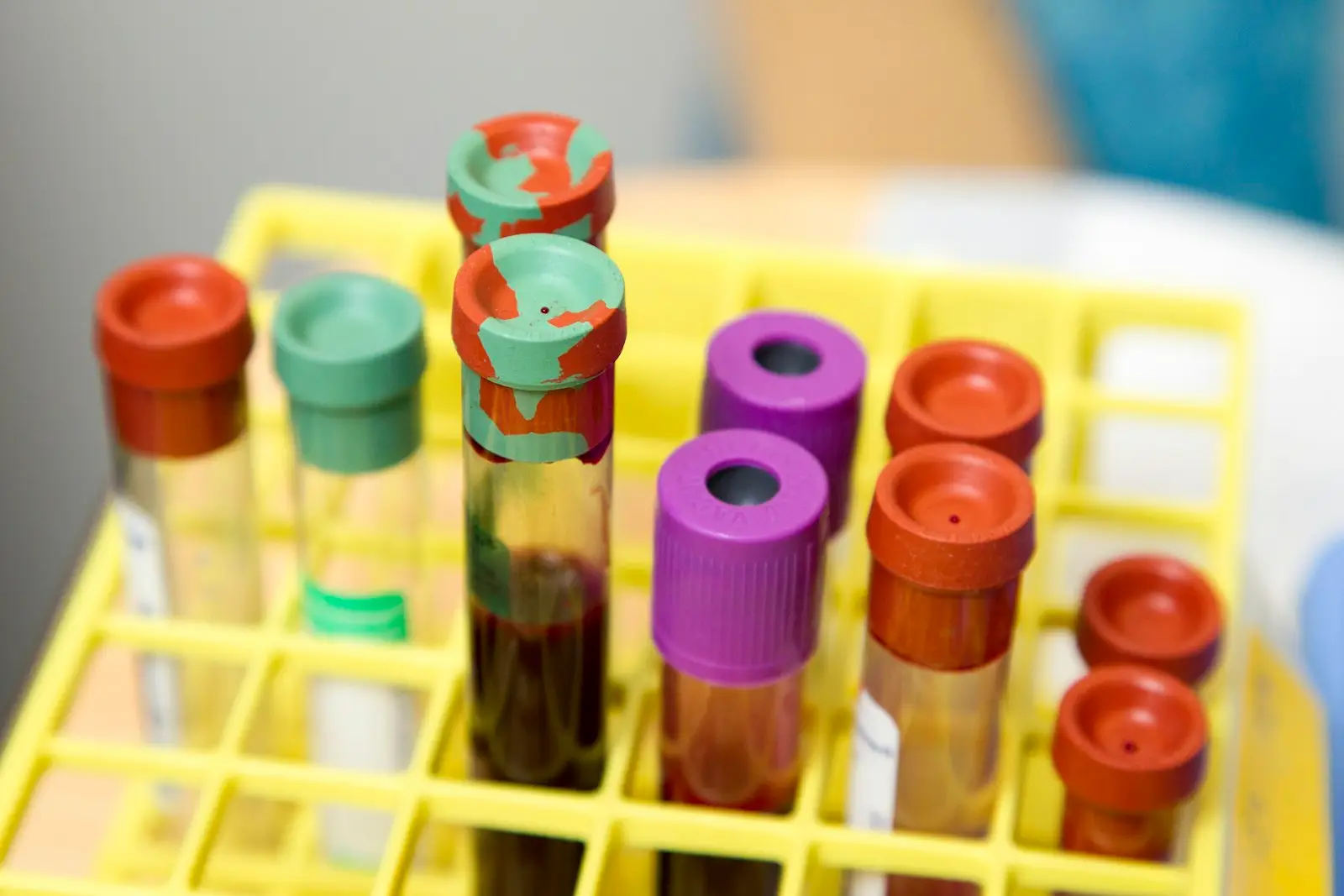
TB-500 is one of the two compounds researchers ask us about most, usually in the same sentence as BPC-157. This page covers what the material actually is, what the published work examines, how it is handled in the lab, and what to check before you buy it. Supplied strictly as reference material for laboratory research, not for human or animal use.
TB-500 is not thymosin beta-4. It is a short synthetic fragment of it. Thymosin beta-4 (Tβ4) is a naturally occurring 43-amino-acid protein found in most mammalian cells, and its best-characterised role is binding monomeric G-actin and regulating actin polymerisation — the process behind cell shape, motility and migration.
The material sold as TB-500 has been characterised in the analytical literature as the N-terminally acetylated 17–23 fragment of Tβ4, corresponding to the actin-binding region of the parent protein. That distinction matters when you are reading the literature: a study on full-length Tβ4 is not automatically a study on TB-500, and a certificate should tell you which one is in the vial.
The heptapeptide region carries the actin-binding motif, and it is far cheaper and more reproducible to synthesise seven residues than forty-three. The trade-off is that the fragment does not necessarily reproduce every activity attributed to the full protein, which is one of the open questions in this area rather than a settled point.
Work on Tβ4 and its fragments is preclinical — cell culture and animal models — and clusters around a few themes:
None of that is a claim about outcomes in humans, and it should not be read as one. It is a description of where the literature sits, so you can find the papers that match your question.
These two are studied together so often that people assume they are variations on a theme. They are not. BPC-157 is a gastric pentadecapeptide with an entirely different structure and a separate body of literature; TB-500 is an actin-binding fragment. The reason they appear side by side is that the mechanisms are unrelated, which is exactly why researchers pair them rather than choose between them.
If that pairing is what you are looking at, BPC-157 with TB-500 covers it in more detail. We also hold two pre-blended formats for researchers who would otherwise reconstitute several vials separately: GLOW 70mg, and KLOW 80mg which adds KPV.
TB-500 ships lyophilised. It is reconstituted with bacteriostatic water, added slowly down the wall of the vial rather than directly onto the powder, and swirled rather than shaken — peptides are sensitive to shear and to foaming. Let it dissolve on its own rather than forcing it.
Lyophilised material is stable at ambient temperature for the length of a domestic transit, which is why it does not need to arrive frozen. Once it is in your hands it belongs in the fridge or freezer, and once reconstituted it should be refrigerated and used within a working window rather than kept indefinitely. Our guide to storing research peptides goes through this properly, including the freeze-thaw question.
A seven-residue peptide is easy to synthesise and therefore easy to synthesise badly. Truncated sequences, residual solvent and counter-ions from synthesis all end up in the vial, and none of them are inert in an assay. A purity figure without a method behind it tells you nothing about any of that.
The compound is the same wherever you get it. The variable is whether the vial contains what the label says.
Our certificate of analysis library publishes certificates by product, and how to read a certificate of analysis walks through reading one line by line. If you are still comparing suppliers, how to spot a peptide scam is the wider version of this checklist.
We hold TB-500 10mg: lyophilised, 10mg per vial, tested to a specification of 99% or greater by HPLC with identity confirmed by mass spectrometry, and dispatched from Australian stock.
Orders are processed within 1–2 business days of payment clearing, with transit typically 2–4 business days to the metro capitals; the shipping policy has the detail. For the rest of the catalogue and how the compounds differ, see what we hold and how to choose, or go straight to the shop.
No. Tβ4 is the full 43-amino-acid protein; TB-500 is a short synthetic fragment of it, characterised as the acetylated 17–23 region. Papers on one are not automatically papers on the other.
That depends entirely on your question. They have unrelated mechanisms, so pairing them introduces a second variable — useful if you are modelling a combined protocol, unhelpful if you are trying to isolate an effect. Standalone vials exist precisely so you can choose.
Refrigerated, protected from light, and used within a working window rather than kept indefinitely. Repeated freeze-thaw cycles are the main avoidable cause of degradation.
10mg, as a single lyophilised standalone vial. That is the only size we hold.
New batch COAs and restock alerts, sent when they happen.
Need more information about Peps Aussie? Get in contact with us via the email below and Peps Aussie will assist you promptly.
Include your name and a relevant subject line.
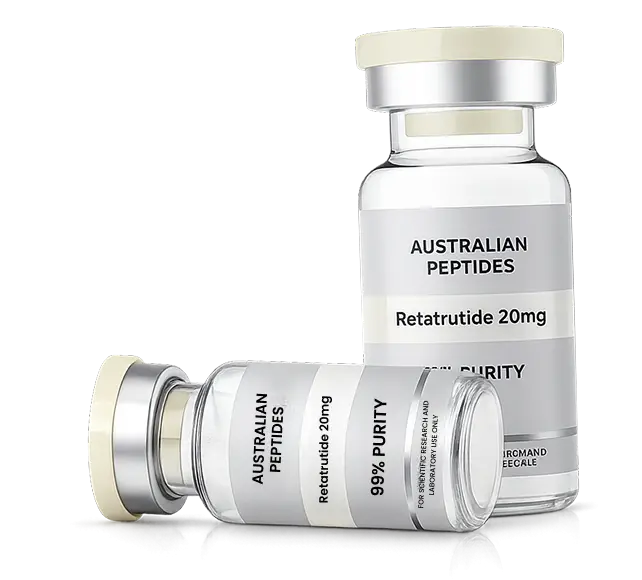
Every batch we publish a third-party certificate of analysis. Get told when a new one lands, and when a sold-out peptide is back.
Subscribe now to keep reading and get access to the full archive.