
$75.00
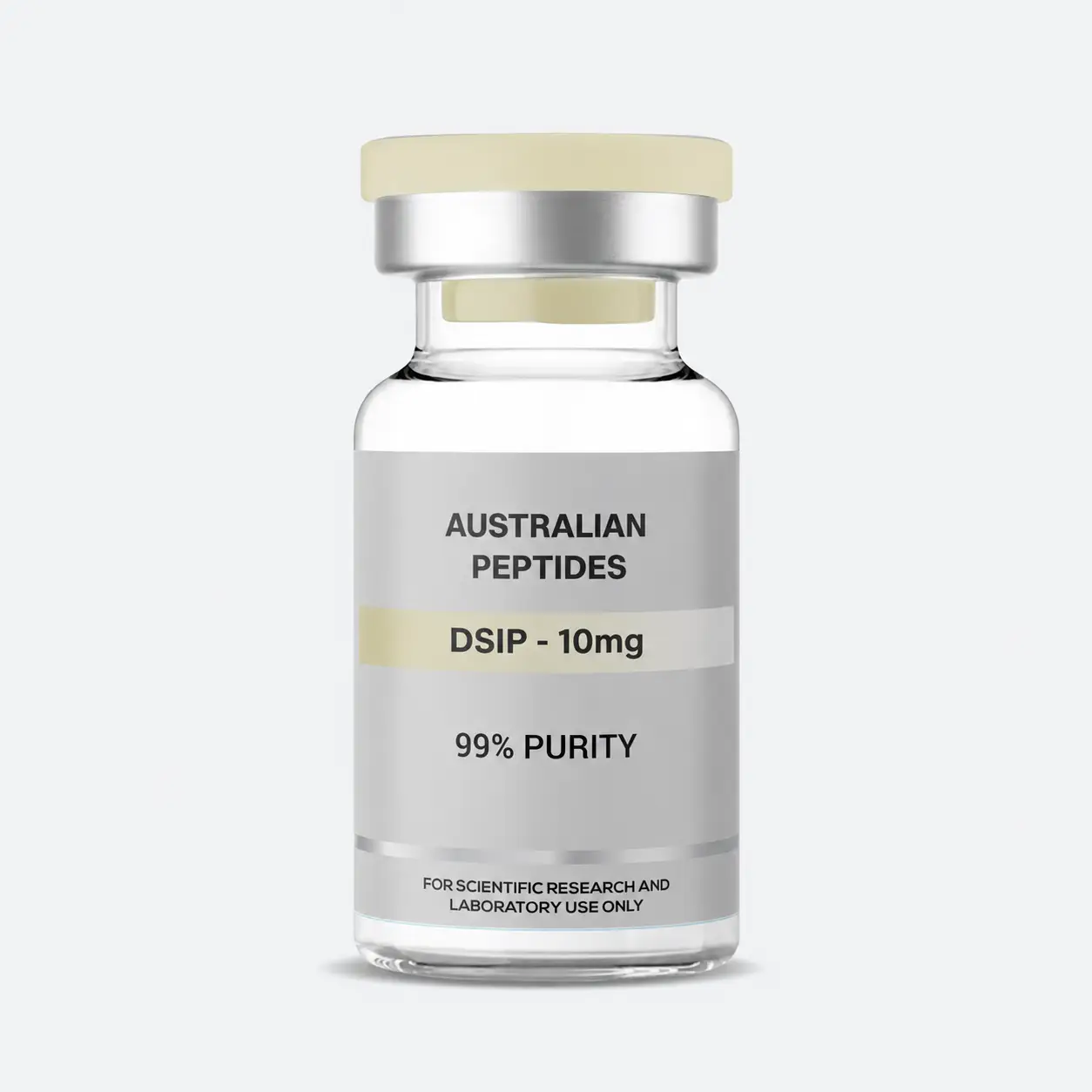
DSIP 10mg (Delta Sleep-Inducing Peptide) is a synthetic nonapeptide historically investigated in sleep physiology, neuroendocrine regulation and experimental stress-response research.
Available from Peps Aussie Australia for controlled laboratory research and analytical applications.
For laboratory research use only. Not intended for human or animal consumption, administration, sleep enhancement or therapeutic use.
Free Delivery on all orders above $320
Out of stock
DSIP 10mg, also known as Delta Sleep-Inducing Peptide, is a synthetic research peptide corresponding to a historically described endogenous peptide sequence, listed by Peps Aussie Australia for scientific investigation, laboratory analysis and controlled experimental research.
DSIP is a nine-amino-acid peptide, commonly referred to as a nonapeptide, that was originally investigated in connection with sleep-associated physiological processes.
The peptide has attracted scientific interest because of historical research examining sleep measurements, neuroendocrine signalling, stress-associated responses and experimental peptide biology.
Early investigations explored whether DSIP was associated with changes in sleep-related physiological measurements.
Subsequent studies produced inconsistent findings, and its precise endogenous biological role remains incompletely understood.
Research involving DSIP has also examined broader neuroendocrine processes, including hormone-associated signalling and experimental responses to physiological stress.
However, the available evidence does not establish that DSIP reliably induces sleep, improves sleep quality or treats insomnia in humans.
The name Delta Sleep-Inducing Peptide reflects the compound’s historical research context rather than a clinically validated therapeutic effect.
Peps Aussie lists DSIP in a nominal 10mg size for laboratory research and analytical applications.
Important: DSIP is intended strictly for laboratory research and analytical purposes. It is not supplied for human or animal consumption, injection, administration, sleep enhancement, therapeutic use or clinical treatment.
DSIP (Delta Sleep-Inducing Peptide) is a nine-amino-acid peptide originally described in research involving sleep-associated physiology.
Its commonly reported amino acid sequence is:
Trp–Ala–Gly–Gly–Asp–Ala–Ser–Gly–Glu (WAGGDASGE)
DSIP has been investigated in experimental neuroscience and neuroendocrinology.
Scientific interest in DSIP includes questions concerning:
These research areas contribute to understanding the biological characteristics of DSIP and related neuropeptides.
The term delta sleep is historically associated with slow-wave sleep and low-frequency brain activity observed during certain sleep stages.
Sleep physiology is commonly investigated using techniques such as electroencephalography (EEG), which records electrical activity associated with brain function.
Historical DSIP research examined whether the peptide influenced sleep-associated measurements.
However, findings have varied across experimental models and study designs.
DSIP should therefore not be assumed to produce predictable changes in sleep architecture or sleep quality.
Published research involving DSIP spans several areas of experimental neuroscience, neuroendocrine physiology and peptide chemistry.
The following sections describe scientific research topics rather than proven therapeutic effects of the Peps Aussie material.
One of the earliest areas associated with DSIP research involves sleep-associated physiological measurements.
Sleep is a complex biological process involving interactions between neural circuits, neurotransmitters and regulatory systems.
Historical investigations involving DSIP examined potential relationships between peptide signalling and sleep patterns.
Relevant research topics include:
These investigations contributed to early interest in DSIP.
However, subsequent research has produced inconsistent results, and DSIP is not established as a reliable sleep-inducing compound in humans.
Neuroendocrine regulation involves communication between the nervous system and endocrine pathways.
Peptides can participate in complex signalling networks associated with hormone release and physiological regulation.
Research involving DSIP has examined neuroendocrine-associated processes.
Relevant research topics include:
These investigations contribute to understanding possible relationships between DSIP and neuroendocrine biology.
They do not establish a predictable hormonal effect in humans.
Stress-related physiology involves coordinated activity across nervous, endocrine and immune-associated systems.
Experimental studies involving DSIP have examined responses associated with physiological stress.
Relevant research topics include:
These investigations contribute to understanding experimental stress-response pathways.
However, they do not establish that DSIP reduces stress, anxiety or related symptoms in humans.
Neuropeptides are short chains of amino acids that can participate in communication and regulation within biological systems.
DSIP has been investigated as part of broader research into neuropeptide-associated signalling.
Relevant research topics include:
These investigations contribute to understanding peptide biology.
However, the precise receptor mechanisms and endogenous physiological role of DSIP remain incompletely characterised.
Historical DSIP research has examined potential relationships with certain endocrine measurements.
Hormonal regulation involves complex feedback systems and tissue-specific responses.
Relevant research topics include:
These studies provide scientific context for DSIP research.
However, isolated experimental findings do not establish that DSIP reliably increases or decreases particular hormones in humans.
DSIP has also been investigated in experimental models involving behavioural physiology.
Behavioural neuroscience examines relationships between biological signalling and observable responses.
Relevant research topics include:
Findings from animal or laboratory models require careful interpretation.
They do not establish clinical benefits for sleep, mood or cognitive performance.
DSIP is sometimes discussed alongside other compounds associated with sleep research.
However, these substances are chemically and functionally distinct.
DSIP:
Melatonin:
Other experimental neuropeptides:
These distinctions are important when interpreting experimental findings.
DSIP is also relevant to analytical investigations involving synthetic peptide identity, structure and material quality.
Laboratories evaluating DSIP may investigate:
Analytical techniques may include high-performance liquid chromatography (HPLC), mass spectrometry (MS) and other suitable methods.
A chromatographic purity result alone does not necessarily establish the complete molecular identity or quantitative content of a supplied peptide.
Peps Aussie lists DSIP in a nominal 10mg size.
| Specification | Details |
|---|---|
| Product name | DSIP |
| Full name | Delta Sleep-Inducing Peptide |
| Listed size | 10mg |
| Peptide type | Synthetic nonapeptide |
| Amino acid sequence | Trp–Ala–Gly–Gly–Asp–Ala–Ser–Gly–Glu |
| Sequence abbreviation | WAGGDASGE |
| Amino acid length | 9 residues |
| Research category | Experimental neuropeptide research |
| Research areas | Sleep physiology, neuroendocrine regulation and stress-associated responses |
| Supplier | Peps Aussie Australia |
| Intended use | Laboratory research and analytical investigation only |
The scientific characteristics above describe DSIP as discussed in research literature. They do not independently verify the identity, composition, purity or content of the supplied material.
Exact molecular identity, amino acid sequence, terminal modifications, salt form, formulation, physical appearance, fill quantity and excipients should be confirmed against the applicable product label and supporting lot documentation.
Analytical verification is an important consideration when evaluating synthetic research peptides.
Peps Aussie maintains a dedicated resource where researchers can review available Certificates of Analysis and supporting analytical records.
View Peps Aussie Certificates of Analysis
When evaluating DSIP analytical documentation, researchers should consider:
High-performance liquid chromatography and mass spectrometry are commonly used in peptide characterisation.
A certificate should be interpreted according to the tests actually performed.
The availability of a certificate does not automatically establish sterility, endotoxin status, a particular purity percentage, pharmaceutical-grade manufacturing or independent verification of every production batch.
Research peptides require appropriate handling to support sample integrity and experimental reproducibility.
Storage requirements for DSIP depend on the molecular structure, formulation, packaging and validated manufacturer stability information.
Laboratories should consider:
No universal storage temperature or reconstitution procedure is recommended without verified product-specific documentation.
All laboratory work should be performed by appropriately qualified personnel using validated procedures and suitable safety controls.
Peps Aussie maintains an Australian-based catalogue of research peptides and laboratory materials for scientific and analytical applications.
DSIP 10mg is the currently listed nominal product size.
Pricing and ordering availability should be confirmed through the product selection area. Inventory is currently pending confirmation.
For current information regarding Australian dispatch, delivery arrangements, processing times and applicable restrictions, visit the Peps Aussie Shipping Policy.
DSIP stands for Delta Sleep-Inducing Peptide. It is a nine-amino-acid peptide historically investigated in sleep-associated physiology and neuroendocrine research.
Research has examined DSIP in relation to sleep-associated measurements, neuroendocrine regulation, stress-related responses and experimental peptide signalling.
The commonly reported amino acid sequence is Trp–Ala–Gly–Gly–Asp–Ala–Ser–Gly–Glu, abbreviated WAGGDASGE.
Historical studies have produced mixed findings. DSIP is not established as a reliable sleep-inducing compound in humans.
No. DSIP is not an established treatment for insomnia or other sleep disorders.
Some historical research examined sleep-stage measurements. However, the evidence does not establish predictable improvements in deep sleep in humans.
No. DSIP is a peptide, while melatonin is an indoleamine hormone involved in circadian rhythm regulation.
Research has examined neuroendocrine and stress-associated pathways involving DSIP. However, these findings do not establish predictable hormonal effects in humans.
Historical human investigations exist, but findings have been inconsistent and do not establish an accepted clinical safety and efficacy profile.
Peps Aussie lists DSIP in a 10mg nominal size. Researchers should verify the individual vial label and supporting analytical documentation.
Available analytical documentation can be reviewed through the Peps Aussie Certificates of Analysis page. Researchers should confirm that any applicable certificate corresponds to the specific production lot and evaluate the tests performed.
Storage requirements depend on the formulation and validated stability characteristics. Follow the manufacturer’s product-specific documentation and established laboratory procedures.
No medical or veterinary approval is claimed for the Peps Aussie DSIP research product.
This product is not supplied for human or animal consumption, administration, diagnosis, prevention or treatment.
Peps Aussie maintains a catalogue of laboratory research peptides and scientific materials for researchers investigating molecular biology, peptide chemistry and experimental neuroscience.
DSIP remains a subject of scientific interest because of its historical investigation in sleep physiology, neuroendocrine regulation and stress-associated responses.
Researchers evaluating DSIP 10mg should prioritise accurate peptide identification, appropriate analytical documentation, batch traceability and validated laboratory procedures.
Explore the Peps Aussie research catalogue at pepsaussie.com.
DSIP 10mg is intended strictly for laboratory research and analytical purposes only.
This product is not intended for human or animal consumption, injection, administration, sleep enhancement, therapeutic use or clinical treatment.
Descriptions of published scientific research are provided for educational and informational purposes only. They do not establish sleep improvement, insomnia treatment, stress reduction, clinical safety or therapeutic suitability for the material offered.
Historical findings involving DSIP should not be assumed to demonstrate predictable biological effects or clinical benefits.
No dosing, self-administration or therapeutic guidance is provided.
| Size | 10mg |
|---|
Reviews here are by invitation. We email a link once your order has arrived, so every review comes from someone who received the product. Lost the email? Find your review link.

Subscribe and we email you a single-use discount code. After that: new batch certificates as they are published, and restock alerts.


Reviews
There are no reviews yet.