
$120.00
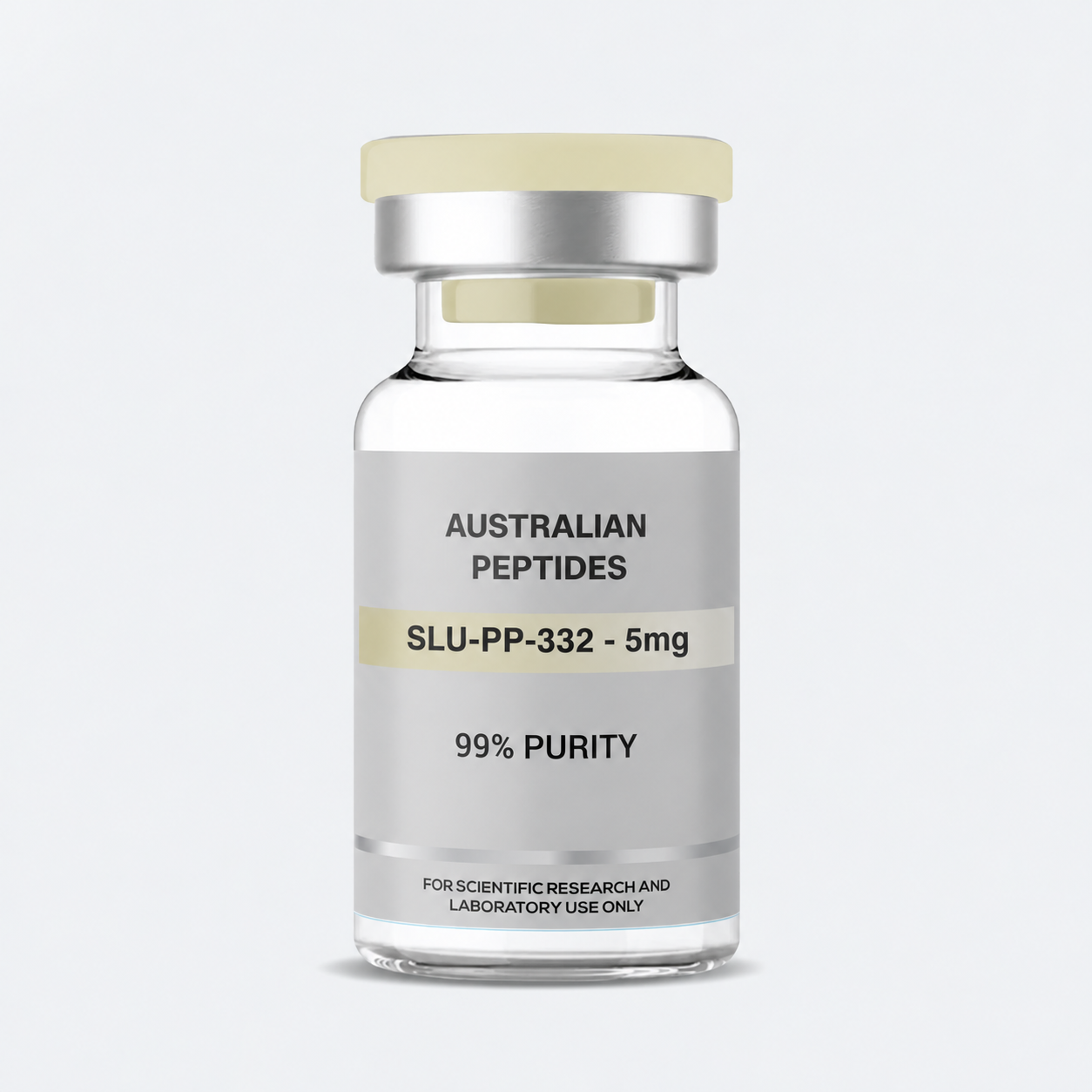
SLU-PP-332 5mg is an experimental synthetic small-molecule research compound investigated in oestrogen-related receptor (ERR) pharmacology, mitochondrial gene regulation, oxidative metabolism and exercise-associated molecular pathways.
Available from Peps Aussie Australia for controlled laboratory research and analytical applications.
For laboratory research use only. Not intended for human or animal consumption, administration or therapeutic use.
Free Delivery on all orders above $320
Out of stock
SLU-PP-332 5mg is an experimental small-molecule research compound listed by Peps Aussie Australia for scientific investigation, laboratory analysis and controlled experimental research.
SLU-PP-332 has attracted scientific interest because of its activity at oestrogen-related receptors (ERRs), a family of nuclear receptors involved in regulating cellular energy metabolism, mitochondrial function and oxidative metabolic pathways.
Published preclinical research has examined SLU-PP-332 in relation to skeletal muscle metabolism, mitochondrial gene expression and exercise-associated molecular adaptations.
The compound is frequently described in scientific and popular discussions as an exercise-mimetic candidate because of findings observed in experimental animal models. However, these findings do not establish that SLU-PP-332 reproduces the full physiological benefits of exercise or provides safe and effective performance or weight-management outcomes in humans.
Unlike many products discussed in peptide research catalogues, SLU-PP-332 is not a peptide. It is a synthetic, non-peptide small molecule investigated for its pharmacological activity at nuclear receptors.
Peps Aussie lists SLU-PP-332 in a nominal 5mg size for laboratory research and analytical applications.
Important: SLU-PP-332 5mg is intended strictly for laboratory research and analytical purposes. It is not supplied for human or animal consumption, injection, administration, therapeutic use or clinical treatment.
SLU-PP-332 is an experimental synthetic small-molecule agonist investigated for its activity at the oestrogen-related receptor family.
Oestrogen-related receptors are members of the nuclear receptor superfamily and act as transcriptional regulators involved in cellular metabolism.
The principal members of this receptor family are:
Despite their names, oestrogen-related receptors are distinct from classical oestrogen receptors. Their classification reflects structural similarities within the nuclear receptor family rather than identical hormone-binding behaviour.
SLU-PP-332 has been investigated as an agonist with activity across the ERR receptor family, with particular scientific interest in ERRα-associated metabolic pathways.
The term exercise mimetic is used in experimental pharmacology to describe compounds investigated for their ability to reproduce selected molecular or physiological adaptations associated with exercise.
SLU-PP-332 has been discussed in this context because preclinical studies have examined changes in oxidative metabolism and exercise-related molecular pathways.
However, the expression exercise mimetic does not mean the compound is equivalent to physical exercise.
Exercise produces a wide range of cardiovascular, neurological, musculoskeletal and metabolic adaptations that cannot be assumed to result from activation of a single receptor pathway.
The available SLU-PP-332 evidence remains preclinical.
Published research has investigated SLU-PP-332 across several areas of molecular pharmacology, metabolism and experimental physiology.
The following sections describe scientific research topics rather than proven biological or therapeutic effects of the Peps Aussie material.
A primary area of SLU-PP-332 research involves its interaction with oestrogen-related receptors.
ERRs are nuclear receptors that participate in the regulation of gene expression associated with energy metabolism and mitochondrial function.
Relevant research topics include:
These investigations contribute to understanding how nuclear receptor activity influences cellular metabolic processes.
Mitochondria play an important role in cellular energy production.
Oestrogen-related receptors are associated with the regulation of genes involved in mitochondrial activity and oxidative metabolism.
Preclinical SLU-PP-332 research has examined:
These findings are relevant to experimental metabolism research but do not establish that the compound improves human mitochondrial function or physical performance.
Skeletal muscle is a major site of energy consumption and metabolic regulation.
Experimental investigations involving ERR agonists have examined molecular pathways associated with muscle oxidative capacity and metabolic adaptation.
Research topics include:
Preclinical studies involving SLU-PP-332 have contributed to interest in how ERR activation may influence metabolic characteristics in skeletal muscle.
These findings should not be interpreted as evidence of improved strength, endurance or muscle development in humans.
Physical exercise influences numerous cellular pathways involved in metabolism, mitochondrial activity and tissue adaptation.
Some experimental SLU-PP-332 studies have examined whether pharmacological ERR activation is associated with selected exercise-related molecular responses.
Relevant scientific questions include:
These investigations do not establish that SLU-PP-332 can replace exercise or reproduce its broader health benefits.
SLU-PP-332 has attracted attention in experimental metabolic research because of its relationship with pathways involved in energy expenditure and substrate metabolism.
Published preclinical investigations have examined metabolic responses in laboratory and animal models.
Relevant research topics include:
Findings in animal models cannot establish that SLU-PP-332 produces safe, effective or clinically meaningful weight loss in humans.
No weight-management benefit is claimed for the Peps Aussie research material.
Nuclear receptors are proteins involved in regulating gene transcription.
Unlike many cell-surface receptors, nuclear receptors can influence gene expression through interactions with transcriptional machinery and associated regulatory proteins.
SLU-PP-332-related research may investigate:
These research topics contribute to broader scientific understanding of nuclear receptor pharmacology.
Because SLU-PP-332 is a synthetic small molecule rather than a peptide, its analytical characterisation differs from that of peptide-based research materials.
Laboratories evaluating SLU-PP-332 may investigate:
Analytical techniques may include high-performance liquid chromatography (HPLC), liquid chromatography–mass spectrometry (LC-MS) and other appropriate methods depending on the material and analytical objectives.
Peps Aussie lists SLU-PP-332 in a nominal 5mg size.
| Specification | Details |
|---|---|
| Product name | SLU-PP-332 |
| Listed size | 5mg |
| Compound type | Synthetic small molecule |
| Peptide classification | Not a peptide |
| Research category | Nuclear receptor pharmacology |
| Investigated receptor family | Oestrogen-related receptors (ERRs) |
| Research areas | Mitochondrial biology, oxidative metabolism and experimental physiology |
| Supplier | Peps Aussie Australia |
| Intended use | Laboratory research and analytical investigation only |
The scientific characteristics above describe SLU-PP-332 as discussed in published literature. They do not independently verify the chemical identity, composition, purity or content of the supplied material.
Exact molecular identity, chemical form, formulation, physical appearance, fill quantity and any excipients should be confirmed against the applicable product label and supporting lot documentation.
Analytical verification is an important consideration when evaluating experimental small-molecule research compounds.
Peps Aussie maintains a dedicated resource where researchers can review available Certificates of Analysis and supporting analytical records.
View Peps Aussie Certificates of Analysis
When evaluating SLU-PP-332 analytical documentation, researchers should consider:
A certificate should be interpreted according to the tests actually performed.
The availability of a certificate does not automatically establish sterility, endotoxin status, a particular purity percentage or independent verification of every production batch.
Experimental small-molecule research compounds require appropriate handling to support sample integrity and analytical reproducibility.
Storage requirements for SLU-PP-332 depend on its chemical form, formulation, packaging and validated manufacturer stability information.
Laboratories should consider:
No universal storage temperature, solvent or preparation procedure is recommended without verified product-specific documentation.
All laboratory work should be performed by appropriately qualified personnel using validated procedures and suitable safety controls.
Peps Aussie maintains an Australian-based catalogue of research peptides, experimental compounds and laboratory materials for scientific and analytical applications.
SLU-PP-332 5mg is the currently listed nominal product size.
Pricing and ordering availability should be confirmed through the product selection area. Inventory is currently pending confirmation.
For current information regarding Australian dispatch, delivery arrangements, processing times and applicable restrictions, visit the Peps Aussie Shipping Policy.
SLU-PP-332 is an experimental synthetic small-molecule agonist investigated for its activity at oestrogen-related receptors, a family of nuclear receptors involved in metabolic gene regulation.
No. SLU-PP-332 is a synthetic small-molecule compound, not a peptide. It is included in research compound catalogues because of its relevance to experimental molecular pharmacology.
Published preclinical research has examined SLU-PP-332 in relation to ERR receptor activation, mitochondrial gene expression, oxidative metabolism, skeletal muscle physiology and exercise-associated molecular pathways.
SLU-PP-332 has been discussed as an experimental exercise-mimetic candidate because animal studies have investigated selected metabolic adaptations associated with ERR activation.
This terminology does not mean that the compound reproduces the complete benefits of physical exercise.
Some preclinical research has examined exercise-related outcomes in animal models. These findings do not establish improved endurance or physical performance in humans.
No established clinical evidence demonstrates that SLU-PP-332 produces safe or effective weight loss in humans. Animal findings should not be interpreted as proof of human weight-management benefits.
Oestrogen-related receptors are nuclear receptors involved in regulating gene expression associated with metabolism, mitochondrial function and other cellular processes. They are distinct from classical oestrogen receptors.
Peps Aussie lists SLU-PP-332 in a 5mg nominal size. Researchers should verify the product label and associated analytical documentation.
Available analytical documentation can be reviewed through the Peps Aussie Certificates of Analysis page. Researchers should confirm that any applicable certificate corresponds to the specific production lot and evaluate the tests performed.
Storage requirements depend on the chemical form, formulation and validated stability characteristics. Follow the manufacturer’s product-specific documentation and established laboratory procedures.
No medical or veterinary approval is claimed for this research compound. It is not supplied for human or animal consumption, administration, diagnosis, prevention or treatment.
Peps Aussie maintains a catalogue of laboratory research materials for researchers investigating molecular biology, cellular metabolism and experimental pharmacology.
SLU-PP-332 remains a subject of scientific interest because of its activity at oestrogen-related receptors and its investigation in preclinical metabolic research.
Researchers evaluating SLU-PP-332 5mg should prioritise accurate chemical identification, appropriate analytical documentation, batch traceability and validated laboratory procedures.
Explore the Peps Aussie research catalogue at pepsaussie.com.
SLU-PP-332 5mg is intended strictly for laboratory research and analytical purposes only.
This product is not intended for human or animal consumption, injection, administration, therapeutic use or clinical treatment.
Descriptions of published scientific research are provided for educational and informational purposes only. They do not establish exercise-equivalent effects, performance enhancement, weight-management benefits, clinical efficacy or safety for the material offered.
No dosing, self-administration or therapeutic guidance is provided.
| Size | 5mg |
|---|
Reviews here are by invitation. We email a link once your order has arrived, so every review comes from someone who received the product. Lost the email? Find your review link.

Subscribe and we email you a single-use discount code. After that: new batch certificates as they are published, and restock alerts.

Reviews
There are no reviews yet.