

If you’ve been researching peptide weight loss options in Australia, chances are you’ve come across names like semaglutide, tirzepatide, and R3TA. These GLP-1 receptor agonists have taken the global health conversation by storm – and Australians are searching for them in record numbers. But what exactly are these compounds, how do they work, and what does the research actually say? This guide breaks it all down in plain language.
GLP-1 stands for glucagon-like peptide-1 — a hormone your gut naturally produces after eating. Its main job is to signal to your brain that you’re full, slow down digestion, and prompt your pancreas to release insulin. In people with obesity or type 2 diabetes, this signalling system can be blunted or disrupted. GLP-1 receptor agonists are synthetic peptides designed to mimic this natural hormone, but with a much longer half-life. Where natural GLP-1 breaks down within minutes, compounds like semaglutide can remain active in the body for days at a time — producing a sustained appetite-suppressing effect.
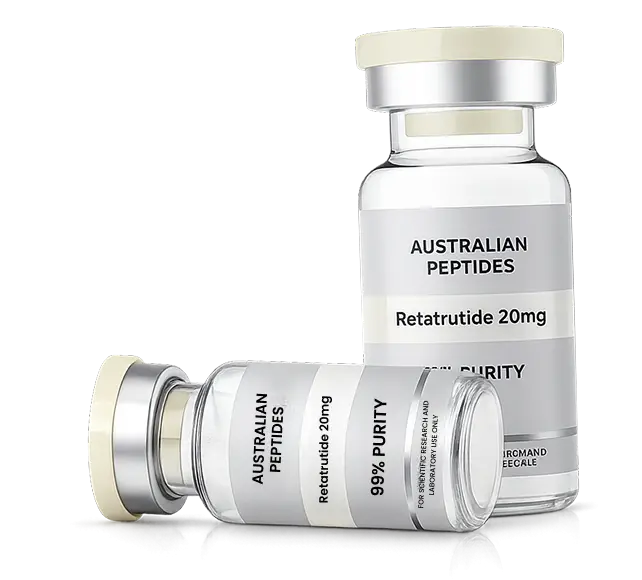
These three compounds represent different generations of GLP-1 research. Semaglutide is a single GLP-1 receptor agonist, widely studied for obesity and type 2 diabetes management. Clinical trials have shown average weight reductions of around 15% of body weight in obese patients over 68 weeks. Tirzepatide is a dual agonist, targeting both GLP-1 and GIP (glucose-dependent insulinotropic polypeptide) receptors. Studies suggest it may outperform semaglutide alone, with some trial participants achieving weight loss of up to 22%. Retatrutide is a newer triple agonist — targeting GLP-1, GIP, and glucagon receptors simultaneously. Early Phase 2 clinical trial data has generated significant interest among researchers, with some participants achieving weight reductions exceeding 24% over 48 weeks.
The clinical evidence base for GLP-1 receptor agonists is among the strongest of any compound class in metabolic medicine. Large-scale randomised controlled trials have demonstrated meaningful and sustained reductions in body weight, improvements in blood glucose control, and — in some trials — reduced cardiovascular event rates. It is important to note, however, that much of this research has been conducted on pharmaceutical-grade, clinically administered versions of these peptides under medical supervision. The picture for research-grade compounds sold online is considerably less clear, and quality can vary significantly between suppliers. The peptides that power these results work on deeply complex metabolic pathways — which is exactly why dosing precision, purity, and professional guidance matter so much.
This means they require a valid prescription from a registered Australian medical practitioner. Research-grade peptides sold online are legally distinct — they are typically labelled ‘for research use only’ and are not approved for human consumption. This distinction matters enormously both legally and from a safety standpoint. Unverified sources may sell products that are mislabelled, impure, or contaminated. Anyone exploring these options should seek guidance from a qualified healthcare professional who can assess their individual health situation and, where appropriate, explore legitimate prescribing pathways.
Worth mentioning in any Australian conversation about peptide weight loss is AOD-9604 — a fragment of human growth hormone developed right here in Australia by researchers at Monash University. Originally designed to stimulate fat-burning without the other effects of growth hormone, AOD-9604 attracted significant research interest in the early 2000s. While its clinical development as an obesity drug stalled at Phase 3 trials, it remains one of the most-searched peptides among Australian wellness communities and continues to be studied in various research contexts.
Whether you are a researcher or someone exploring options for your own health, peptide quality is non-negotiable. Reputable suppliers will provide independent third-party lab test results — typically HPLC (High Performance Liquid Chromatography) and mass spectrometry reports — confirming purity and concentration. At Peps Aussie, every product in our range is independently tested by HPLC with identity confirmed by mass spectrometry, and the certificate for that batch is published before it ships. We provide full documentation with every order, because we believe transparency and quality are the foundation of responsible research.
New batch COAs and restock alerts, sent when they happen.

Need more information about Peps Aussie? Get in contact with us via the email below and Peps Aussie will assist you promptly.
Include your name and a relevant subject line.
Every batch we publish a third-party certificate of analysis. Get told when a new one lands, and when a sold-out peptide is back.