

When most people hear about next-generation receptor agonists like Retatrutide, the conversation inevitably centres on weight reduction. And while the weight loss data from the TRIUMPH-1 trial is genuinely remarkable, Australian researchers investigating Retatrutide cardiometabolic Australia outcomes are discovering something potentially more significant — the compound’s profound effects on the cardiovascular system that extend well beyond the number on the scale.
In August 2026, research interest in R3TA 20mg has accelerated considerably within Australian preclinical and translational research programmes. This growing body of investigation is focused not just on adiposity, but on what happens to triglycerides, blood pressure, inflammatory markers, and the broader constellation of cardiometabolic risk factors when this triple receptor agonist enters the picture. The results from TRIUMPH-1’s secondary endpoints are prompting serious scientific discussion about the compound’s mechanism of action and its potential implications for cardiometabolic biology.
To appreciate why Retatrutide’s cardiometabolic effects are so pronounced, it helps to understand what makes this compound mechanistically distinct. Unlike first-generation GLP-1 receptor agonists or even dual GIP/GLP-1 agonists, Retatrutide operates as a triple agonist, simultaneously targeting three key receptors:
This third agonist component — glucagon receptor activation — is what separates Retatrutide from its predecessors and appears to be central to the cardiometabolic effects generating so much research interest. Glucagon receptor signalling in the liver directly influences very-low-density lipoprotein (VLDL) production, triglyceride clearance, and hepatic lipid accumulation, providing a mechanistic pathway that helps explain the remarkable lipid data emerging from TRIUMPH-1.
The TRIUMPH-1 trial, which evaluated Retatrutide across multiple dosing cohorts including the 20mg arm, captured a comprehensive array of cardiometabolic secondary endpoints alongside the headline weight loss figures. For researchers investigating Retatrutide cardiometabolic Australia applications, these secondary endpoints tell a compelling story.
Perhaps the most striking secondary finding from TRIUMPH-1 was the 41% reduction in serum triglycerides observed in subjects receiving Retatrutide at the higher dosing range. To contextualise this figure, it is worth noting that triglyceride reduction of this magnitude is typically associated with dedicated pharmacological interventions — fibrates, high-dose omega-3 fatty acids, or niacin derivatives — none of which produce simultaneous effects across the broader cardiometabolic landscape in the way Retatrutide appears to.
Elevated triglycerides are a cornerstone of metabolic syndrome and represent an independent cardiovascular risk factor. In the Australian context, where metabolic syndrome prevalence continues to track at concerning levels, a compound capable of producing 41% triglyceride reductions alongside other systemic effects is drawing significant research attention from institutions examining non-alcoholic fatty liver disease (NAFLD), insulin resistance, and cardiovascular risk stratification.
The mechanistic explanation for this triglyceride effect likely involves several converging pathways. Glucagon receptor activation suppresses hepatic lipogenesis and enhances fatty acid oxidation, reducing the substrate available for VLDL triglyceride synthesis. Simultaneously, GLP-1 receptor signalling contributes to improved insulin sensitivity, reducing the hyperinsulinaemia that typically drives excessive hepatic triglyceride production. The net result appears to be a substantial and sustained reduction in circulating triglyceride levels that exceeds what would be predicted from weight loss alone.
The secondary endpoint data for blood pressure is equally noteworthy. TRIUMPH-1 participants receiving Retatrutide demonstrated a 12.3 mmHg reduction in systolic blood pressure — a clinically meaningful magnitude that sits comfortably within the range associated with reduced cardiovascular event risk in epidemiological literature.
Blood pressure reduction in metabolic intervention research can be a confounded finding — weight loss alone typically produces modest hypertensive benefits, and it can be difficult to isolate compound-specific effects from the indirect consequences of adiposity reduction. However, analysis of the TRIUMPH-1 data suggests that the blood pressure effects of Retatrutide may exceed what would be predicted from weight change alone, pointing toward potential direct vascular or renal mechanisms worthy of further investigation.
Several hypotheses are being explored by researchers examining Retatrutide cardiometabolic Australia outcomes:
For Australian research programmes focused on hypertension in the context of metabolic disease, a 12.3 mmHg systolic reduction represents a compelling signal that warrants deeper mechanistic investigation.
Beyond triglycerides and blood pressure, the TRIUMPH-1 secondary endpoints captured meaningful changes in hepatic biomarkers that are driving considerable interest among Australian researchers focused on liver disease and metabolic dysfunction-associated steatotic liver disease (MASLD) — the updated nomenclature increasingly used in Australian clinical research settings for what was previously termed NAFLD.
Reductions in alanine aminotransferase (ALT) and aspartate aminotransferase (AST) levels in TRIUMPH-1 participants suggest hepatocellular stress reduction, potentially consistent with improvement in hepatic steatosis. Given that MASLD affects an estimated one in three Australian adults to some degree, and that it represents a significant driver of progressive liver disease and cardiovascular risk, these hepatic signals are scientifically meaningful.
The glucagon receptor component of Retatrutide’s action is particularly relevant here. Research in lipid metabolism has consistently shown that glucagon signalling promotes fatty acid oxidation in hepatocytes and suppresses de novo lipogenesis — exactly the pathophysiological processes that are dysregulated in hepatic steatosis. A compound that can address hepatic lipid accumulation while simultaneously improving systemic cardiometabolic parameters represents a genuinely novel research proposition.
Chronic low-grade inflammation is a thread that runs through virtually every major cardiometabolic disease — atherosclerosis, type 2 diabetes, heart failure, and metabolic syndrome all involve persistent inflammatory signalling that contributes to disease progression. TRIUMPH-1 secondary analyses captured reductions in high-sensitivity C-reactive protein (hs-CRP), a widely used marker of systemic inflammation and an independent predictor of cardiovascular events.
While the inflammatory data from TRIUMPH-1 is still being fully characterised in the peer-reviewed literature, the directional reduction in hs-CRP is consistent with what would be expected from a compound producing the metabolic changes observed — reduced adiposity, improved insulin sensitivity, and lower triglyceride burden all tend to reduce the inflammatory tone of metabolic tissue. Whether Retatrutide has additional direct anti-inflammatory mechanisms via its receptor targets remains an open and actively studied question.
Improvements in fasting glucose, fasting insulin, and calculated insulin resistance indices such as HOMA-IR represent additional cardiometabolic endpoints of interest in the TRIUMPH-1 dataset. For Australian researchers examining type 2 diabetes prevention pathways and insulin resistance as a research endpoint, the degree of glycaemic improvement associated with Retatrutide 20mg — particularly in subjects without established diabetes at baseline — provides important data on how the compound affects glucose homeostasis independent of its weight effects.
A central question occupying researchers investigating Retatrutide cardiometabolic Australia applications is the degree to which the observed cardiometabolic improvements are mediated by weight loss versus direct receptor-mediated mechanisms. This distinction matters significantly for understanding the compound’s biology and for informing research design in preclinical and translational models.
Some of the TRIUMPH-1 secondary endpoint analysis suggests that cardiometabolic improvements, particularly in triglycerides, may be disproportionate to the weight change observed — a finding consistent with direct hepatic and metabolic effects from glucagon receptor activation that operate independently of adiposity reduction. If validated in further research, this would position Retatrutide as a compound with genuine dual cardiometabolic and weight-modifying properties rather than a weight loss compound with secondary cardiovascular benefits.
Australian research programmes using animal models and in vitro systems are well-positioned to interrogate this question, isolating receptor-specific contributions to observed metabolic changes in controlled experimental settings.
The research landscape for Retatrutide in Australia has expanded considerably through 2025 and into 2026. Several factors make Australia a particularly active environment for investigating cardiometabolic peptides of this class:
For research groups examining cardiometabolic biology, Retatrutide 20mg represents a scientifically compelling tool for interrogating the intersection of lipid metabolism, blood pressure regulation, hepatic function, and insulin signalling through a triple receptor agonist mechanism that has not previously been available in research settings.
For Australian research institutions and investigators interested in exploring Retatrutide’s cardiometabolic profile, understanding the compound’s characteristics at the 20mg dosing level is important context.
The 20mg dose represents the higher end of the dosing range examined in TRIUMPH-1, and is associated with the most pronounced cardiometabolic secondary endpoint effects, including the 41% triglyceride reduction and 12.3 mmHg blood pressure findings. Research programmes focused on mechanistic investigation of cardiometabolic endpoints — particularly lipid metabolism and vascular effects — may find the 20mg dosing level most relevant for understanding the compound’s maximal biological activity.
Key research design considerations for investigators examining Retatrutide cardiometabolic Australia outcomes include:
The secondary endpoint data from TRIUMPH-1 has opened a number of research questions that remain incompletely answered and represent genuine frontiers for investigation. Among the most scientifically interesting for researchers in the Retatrutide cardiometabolic Australia space:
Beyond total triglyceride reduction, what happens to small dense LDL particle numbers, HDL functionality, and the overall atherogenic lipoprotein landscape? These questions require more granular lipid analysis than standard panel testing provides, and represent important mechanistic territory for understanding cardiovascular risk implications.
Kidney function sits at the intersection of blood pressure regulation, volume homeostasis, and cardiometabolic risk. Understanding how Retatrutide’s effects on these systems interact — and whether there are direct renal receptor-mediated effects — is an important research direction.
Emerging research with GLP-1 receptor agonists has demonstrated direct cardiac effects beyond blood pressure reduction, including potential improvements in diastolic function and cardiac geometry. Whether Retatrutide’s triple agonist profile produces additional cardiac-specific effects is a compelling area for investigative focus.
The relationship between Retatrutide’s metabolic effects and the inflammatory biology of the vessel wall — endothelial activation, macrophage function in atherosclerotic plaques, smooth muscle cell behaviour — represents mechanistically rich territory that preclinical research programmes are well-positioned to explore.
For Australian research programmes seeking access to high-quality Retatrutide 20mg for legitimate research purposes, supplier quality and documentation are paramount considerations. Research peptides used in serious scientific investigation should be accompanied by rigorous analytical documentation, including third-party mass spectrometry verification, HPLC purity analysis, and clear certificates of analysis.
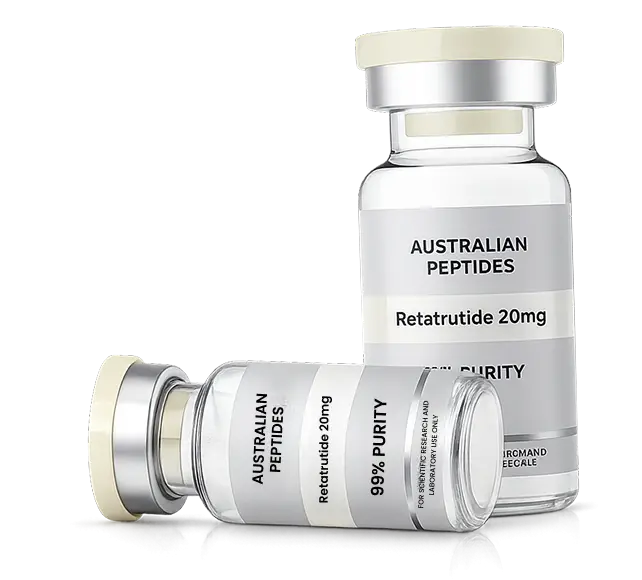
Peps Aussie provides Retatrutide 20mg formulated to research-grade standards, with comprehensive analytical documentation appropriate for use in legitimate research contexts. The compound is supplied exclusively for research purposes, consistent with regulatory requirements governing peptide research materials in Australia.
As the Retatrutide cardiometabolic Australia research community continues to expand its investigation of this compound’s remarkable secondary endpoint profile, having access to reliably characterised research material is a foundational requirement for producing reproducible, meaningful scientific data.
Disclaimer: Retatrutide 20mg is supplied by Peps Aussie strictly for legitimate scientific research purposes only. This compound is not approved for human therapeutic use in Australia or any other jurisdiction. It is not intended for human consumption, self-administration, or any application outside of controlled research settings. All research involving this compound must be conducted in accordance with applicable institutional, ethical, and regulatory requirements. The information presented in this article is intended for educational and research-informational purposes only and does not constitute medical advice, clinical guidance, or therapeutic recommendation. Peps Aussie makes no claims regarding the therapeutic efficacy or safety of Retatrutide for human use. Researchers are responsible for ensuring compliance with all relevant laws, regulations, and institutional policies governing the acquisition and use of research peptides.
The trial literature is indexed on PubMed, including the phase 2 study in people with type 2 diabetes. Efficacy in humans outside those trials is not established, and nothing here is a therapeutic claim. For handling common to all lyophilised material see our peptide storage guide, and for sourcing standards, how to choose a supplier.
New batch COAs and restock alerts, sent when they happen.

Need more information about Peps Aussie? Get in contact with us via the email below and Peps Aussie will assist you promptly.
Include your name and a relevant subject line.
Every batch we publish a third-party certificate of analysis. Get told when a new one lands, and when a sold-out peptide is back.